Why health and safety matters for UK removals companies
The removals industry combines some of the highest-risk workplace activities in any service sector. Every day, removals crews lift heavy furniture, drive HGVs and vans, work in unfamiliar properties, and interact with the public. The Health and Safety Executive (HSE) consistently identifies manual handling injuries and road traffic incidents as the leading causes of workplace harm — both of which are daily realities for removals teams.
Beyond the legal obligations, proper health and safety documentation matters commercially. Commercial clients — offices, hospitals, schools, and government buildings — almost always require RAMS documents and risk assessments before allowing removals work on their premises. Without them, you lose contracts. For a sector-wide breakdown, see our guide on Health and Safety Requirements for UK Contractors.
What documentation does a UK removals company legally need?
Under the Management of Health and Safety at Work Regulations 1999, every employer must carry out a suitable and sufficient risk assessment. For removals companies, this means assessing the key hazards of your operations:
- Manual handling risk assessment — required under the Manual Handling Operations Regulations 1992. Must cover the loads handled, the working environment, and the physical capabilities of your team.
- Driving for work risk assessment — the Management of Health and Safety at Work Regulations require assessment of driving risks. This should cover HGV/LGV operations, van driving, fatigue management, and lone driver procedures.
- COSHH assessment — for packing materials, cleaning products, and any specialist substances used in the removals process.
- General workplace risk assessment — covering your depot, storage facility, and office if applicable.
What is a RAMS document and when is it required?
RAMS stands for Risk Assessment and Method Statement. It is a combined document required by most commercial clients before removals work begins. The risk assessment identifies the hazards; the method statement explains step by step how the job will be carried out safely.
You will need a RAMS document when working in:
- Commercial offices, schools, hospitals, and public buildings
- Properties managed by facilities management companies
- Any premises operating under a principal contractor (CDM 2015 projects)
- Government buildings or NHS estates
Assessment First generates a complete, professional RAMS pack for a commercial move through a guided workflow — covering all the standard sections required by procurement teams and facilities managers. For the full picture of what UK sites expect, see our overview of Site Safety Paperwork Requirements (UK).
Daily safety briefings for removals crews
A daily safety briefing — recorded and signed off by each crew member — is one of the most important habits your business can develop. It does three things: it focuses the crew on that day's specific hazards, it creates a training record for insurance and legal purposes, and it demonstrates to commercial clients that you take safety seriously.
A good daily briefing for a removals crew takes five minutes. It should cover:
- Today's job — location, customer, and specific hazards at that property
- PPE required — back supports, gloves, safety footwear
- Driving arrangements — driver hours, route, and parking plan
- Manual handling reminders — items requiring team lifts or mechanical aids
- Emergency procedures — nearest hospital, emergency contact
Assessment First's Field Mode lets supervisors run this briefing digitally, collect crew signatures on their phones, and build a permanent record of every briefing delivered.
Key hazards in the removals industry
Understanding the specific hazards in removals work is the starting point for every risk assessment. The most significant hazards for UK removals companies are:
Manual handling
Manual handling injuries account for a large proportion of workplace injuries in the removals sector. Heavy furniture, white goods, and pianos pose particular risks. Your manual handling risk assessment should identify the specific items your teams handle, the environments they work in, and the controls in place — mechanical aids, team lifts, pre-job briefings.
Driving for work
Road traffic incidents are the leading cause of fatal work-related injuries in the UK. Removals companies with van and HGV fleets have significant exposure. Controls should include: driver licence verification, vehicle pre-trip inspections, load securing procedures, fatigue management, and mobile phone policies.
Working at height
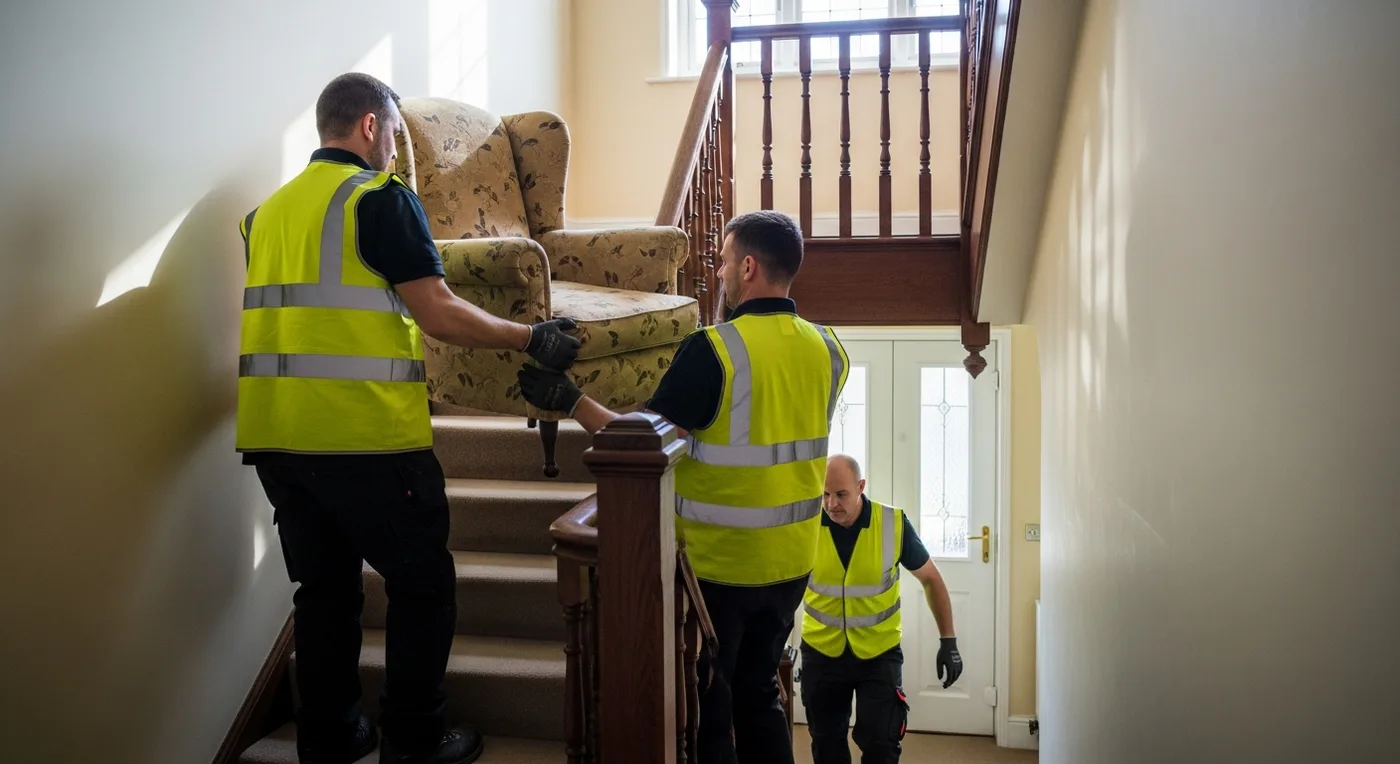
Stair carries, loft access, and multi-storey properties all involve working at height risks. Your risk assessment should cover stair climbers and equipment used, two-person protocols for stair carries, and how your team assesses an unfamiliar property before lifting begins.
Working in customer properties
Every job is in a different location with different hazards. Removals companies must assess the duty of care owed to customers, neighbours, and the public — floor protection, dust management, securing access, and communicating work progress to occupants.
Commercial contracts and RAMS
Winning commercial contracts — office moves, hospital relocations, school clearances — requires professional RAMS documentation. Facilities managers and procurement teams will assess your RAMS before awarding work. A generic, poorly completed document will lose you the contract; a professional, job-specific RAMS demonstrates competence and wins business.
Assessment First lets you generate a RAMS pack tailored to each commercial job through a guided workflow. You can duplicate and adapt previous RAMS for similar jobs, maintaining consistency while updating the site-specific details for each new contract.
Getting started
Start with your general risk assessment covering the core activities of your business: manual handling, driving, and working in customer premises. Then build your RAMS pack for your most common commercial job type. Assessment First is explore the current access route — create your first risk assessment or RAMS pack today.